Kampot Neighborhood Guide
Everything you need to know about living in Kampot. Which area to choose when looking for a rental property in Kampot
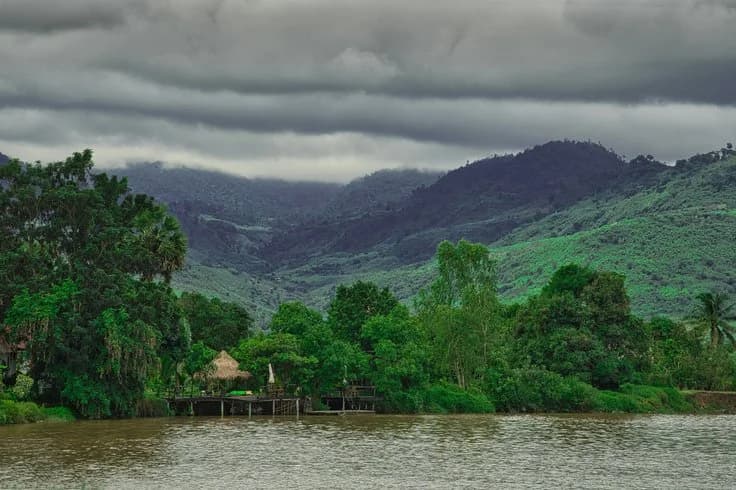
Kampot, a picturesque riverside town in southern Cambodia, continues to attract renters with its colonial heritage, lush landscapes, and serene atmosphere. Formerly a French colonial hub famous for its world-class pepper, Kampot now merges historical allure with contemporary expat lifestyles. For more area guides, see our complete neighborhood guides collection.
Its location along the Tuek Chhou River, backed by misty mountains and verdant plantations, provides an enchanting setting for those fleeing the intensity of urban centers like Phnom Penh or Siem Reap. The town hosts a thriving yet subtle expat community, where English is commonly spoken in tourist areas.
Social activities center on the riverside esplanade, featuring sunset boat trips and eateries. Healthcare has advanced with facilities like Sonja Kill Memorial Hospital and expat clinics, though serious issues may necessitate trips to Phnom Penh. Shopping combines vibrant markets like Psah Samaki for fresh goods with emerging national stores. Recreational pursuits range from river kayaking and kiteboarding to Bokor National Park hikes or tours of pepper farms like La Plantation in Koun Satv.
The rental market in Kampot is affordable and varied, with furnished properties including air-conditioning and balconies readily available. Prices typically span $200–$500 monthly for apartments or villas, influenced by location and features, with expat demand driving modest increases in desirable zones.
Popular zones reflect the town's layout: urban center, riversides on both banks, northern extensions, outlying communes, and now the suburban International Village. Each presents distinct advantages and drawbacks, shaped by access to services, mobility requirements, and environmental factors. Extended leases (12–24 months) often secure discounts, and utilities such as electricity ($80/month with AC) and internet ($15/month) maintain low living expenses—a pair can thrive on under $1,100 monthly.
Central Town (Kampot City Center)
On the eastern bank of the Tuek Chhou River, Kampot's central district revolves around Old Market Street and the Durian Roundabout. This energetic yet contained neighborhood teems with cafes, eateries, bars, and retailers, ideal for renters desiring deep cultural immersion.
Its walkability shines—dining, markets, and transit are steps away, promoting a seamless local integration. Accommodations encompass contemporary apartments (averaging 84 sqm) and classic shophouses, equipped with AC and urban vistas. Rents begin at $250 for one-bedrooms, escalating to $500 for two-bedrooms, usually fully equipped.
Best for brief visits or dynamic expats, though noise-sensitive individuals may opt elsewhere.
Pros: Accessibility and sociability. Cons: Scarce parking and seasonal tourist influxes.
South Town (End of the Promenade)
Where the riverfront promenade ends and the salt fields begin, South Town offers a quieter alternative to the busy center while staying close to town. It's a 10-minute walk or short tuk-tuk ride from the Durian Roundabout.
This area has a mix of older Khmer houses and newer houses. Properties often have more space than central town, with gardens and parking. Rents range $200–$450 monthly.
You're close enough to walk to restaurants and cafes, but far enough to escape the noise. The promenade is ideal for evening walks, and you're right next to Fish Market for fresh seafood.
Pros: Walkable to center, quieter than downtown, good value. Cons: Fewer restaurants nearby, can feel isolated at night.
Kep Road
The main road connecting Kampot to Kep runs southeast from town, passing through a mix of local villages and newer developments. This corridor appeals to renters who want easy access to both Kampot town and Kep's beaches and crab market.
Housing along Kep Road ranges from simple Khmer-style homes to modern villas with gardens. The further from town, the more space you get for your money. Rents typically run $150–$400 monthly depending on distance and amenities.
A scooter is essential here—you're 5–15 minutes from central Kampot depending on location. The tradeoff is space, privacy, and easy weekend trips to Kep without the backtrack through town.
Pros: Space and privacy, easy Kep access, affordable. Cons: Scooter required, limited walkable amenities, road noise on the main strip.
North Riverfront
Spanning northward past town borders, this sector epitomizes leisure with economical bungalows. Roughly 9km (20-minute tuk-tuk) from the hub, it boasts guesthouses and hostels with river entry for aquatic pursuits like swimming or paddling.
Traffic can be difficult during holidays as the new bridge gets backed up.
Pros: Cost-effective and outdoor-focused. Cons: Sparse eateries (often in-house) and reliance on transport.
Tuek Chhou and Outskirts (Including Koun Satv)
Just 1–4km from town, Tuek Chhou District and Koun Satv offer a quieter countryside lifestyle surrounded by fruit farms and rice fields. You'll find traditional wooden houses alongside newer developments—several small projects have recently added 1-2 bedroom villas with modern kitchens and private gardens, priced $250–$450 monthly. Many properties include sunset-facing decks, and kayaks or bikes for exploring the area.
Pros: Affordable, peaceful, authentic countryside feel. Cons: Few shops or restaurants, scooter essential.
International Village (Phum Barang)
Situated 5–10 km from Kampot's core toward Bokor Mountain, International Village—informally named for its expat cluster and locally known as Phum Barang—is a rapidly growing suburban enclave spanning 5–10 sq km. This area, with dirt and partial concrete roads, houses around 50–700 foreigners in custom-built homes, guesthouses, and bungalows amid countryside.
The area has plenty of amenities: restaurants, cafes, yoga studios, spas, and pools. A mix of expats from different countries creates a welcoming community with regular social events. Schools, markets, and Sonja Kill Hospital are all accessible.
For long-term renters, this is one of Kampot's best options—affordable, good for remote work, and with a ready-made social network. Many landlords offer discounts on 12-month leases, and rents typically range $150–$300 monthly.
Pros: Strong expat community, countryside setting, good value. Cons: You'll need a scooter, and things get quieter in low season.
Fish Island
Traeuy Kaoh, known locally as Fish Island, sits just south of the old bridge. Once the heart of Kampot's fishing and salt industries, it's now attracting renters looking for something more authentic and off the beaten path. The island is accessible by bridge from the center and offers views of the salt fields and Gulf of Thailand.
Housing here is mostly local Khmer-style homes, though boutique guesthouses and bungalows have started appearing. Many are pet-friendly with garden settings and river views. Rents are among the lowest in the area at $100–3250 monthly.
Sea breezes keep the island cooler than town during hot season
Pros: Affordable, authentic atmosphere, sea breezes. Cons: Limited amenities, early-riser lifestyle, fewer expat services.
Kampot Areas Compared
| Area | Rental Price | Pros | Cons |
|---|---|---|---|
| Central Town | $250–$400 | Walkable, social, convenient | Noisier, crowds |
| South Town | $200–$350 | Walkable, quieter, good value | Fewer restaurants, isolated nights |
| Kep Road | $150–$400 | Space, privacy, easy Kep access | Scooter required, road noise |
| North Riverfront | $150–$350 | Budget-friendly, nature activities | Transport needed, limited dining |
| Tuek Chhou Outskirts | $160–$300 | Affordable, off-path tranquility | Sparse services, vehicle required |
| International Village | $150–$300 | Diverse expats, countryside charm | 5-10km from town, seasonal quiet |
| Fish Island | $100–$250 | Affordable, authentic, sea breezes | Limited amenities, fewer services |
Looking for a change of pace? Compare Kampot's laid-back lifestyle with the best areas in Phnom Penh to find the right fit for you.